
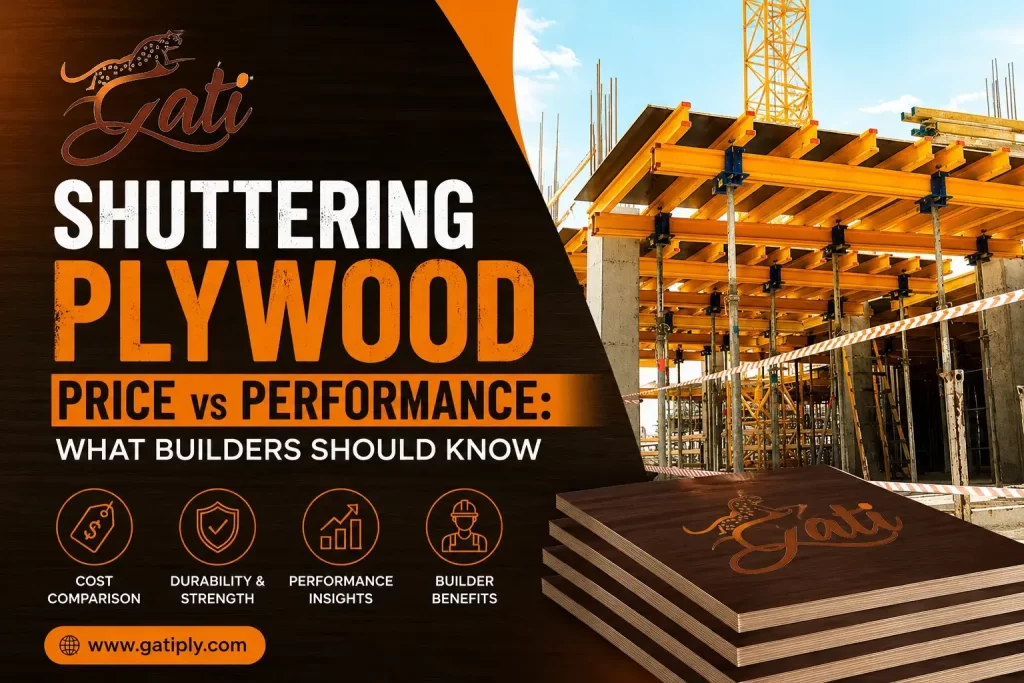
When purchasing shuttering plywood, builders mainly focus on price. Though we understand that cost is an important consideration, choosing plywood based on a lower price can lead to higher expenses in the future. To get the best quality shuttering ply, considering other factors like durability, strength, reusability, and smooth finish also matters. They must offer excellent resistance to water and moisture and must be capable of giving a smooth and proper finish to concrete structures.
At Gati Shuttering & Plywood Ply, we believe that contractors and builders should evaluate both price and performance before buying them. In this blog, we are sharing a comparison between the two along with factors that influence them, to help you get a better understanding of the same.
Main Factors That Affect Shuttering Plywood Price
The price of shuttering plywood varies depending on several factors. By understanding these factors, builders can easily make informed decisions and choose the right product for their project requirements. The factors include:
Thickness of the Plywood – Thicker shuttering plywood generally costs more because it uses additional raw materials and offers greater load-bearing capacity. The required thickness often depends on the scale and nature of the construction project for which it will be used.
Quality of Raw Materials – The type and quality of wood veneers used in manufacturing directly affect the cost. Hardwood-based shuttering ply is more expensive because it offers superior durability and strength.
Waterproof Bonding and Resin Quality – Premium waterproof adhesives and resins increase overall manufacturing costs. But at the same time, they also improve moisture resistance and service life.
Film Coating and Surface Finish – Film-faced shuttering plywood with protective coatings typically costs more than standard variants. However, it provides smoother concrete finishes and better durability during repeated use.
Availability to Reuse – Plywood designed for multiple reuse cycles carries a higher initial price. However, it often delivers lower long-term costs due to reduced replacement requirements.
Manufacturing Standards and Brand Reputation – Products manufactured under strict quality control standards may cost more. However, they also provide consistent performance, reliability, and better value over time.
Main Factors That Affect Shuttering Plywood Performance
Like price, the performance of shuttering ply is also influenced by several factors, which we have shared below.
Core Material Quality – The strength of shuttering plywood depends heavily on the quality of its core veneers. A strong core helps prevent bending, cracking, and deformation during concrete pouring.
Water Resistance – Construction sites frequently expose plywood to water, cement slurry, and changing weather conditions. High-performance shuttering plywood offers superior moisture resistance, helping maintain structural integrity throughout the project.
Reusability – One of the most important performance indicators is the number of times the plywood can be reused. Higher reusability lowers the overall cost per use and improves project economics.
Surface Finish – Quality shuttering plywood provides a smooth and even surface that results in cleaner concrete finishes. This can reduce the need for additional plastering and finishing work.
Shuttering Plywood Price vs Performance Comparison
| Factor | Low Price Shuttering Plywood | High Performance Shuttering Plywood |
| Initial Cost | Low | High |
| Durability | Moderate | Excellent |
| Reuse Cycles | Limited | Higher |
| Water Resistance | Basic | Superior |
| Concrete Finish | Average | Smooth and uniform |
| Long-Term Cost | Higher due to replacements | Lower due to extended use |
| Project Efficiency | Moderate | Better productivity |
Why Shuttering Plywood’s Performance Matters More Than Price?
A lower-priced ply may appear budget-friendly during procurement, but frequent replacements, poor concrete finish quality, and reduced durability lead to an increase in total project costs. On the other hand, performance-focused plywood is known for delivering:
- Better structural integrity
- Reduced material wastage
- Improved concrete finish
- Faster project execution
- Lower cost per use
- High long-term savings
Why Choose Gati Shuttering & Plywood Ply?
At Gati Shuttering & Plywood Ply, we manufacture shuttering plywood that meets the demanding requirements of modern construction projects. Our products are engineered for strength, durability, moisture resistance, and multiple reuse cycles. Whether you are working on residential, commercial, or infrastructure projects, our shuttering plywood helps ensure reliable formwork performance and better project economics.
Conclusion
When comparing shuttering plywood price vs performance, the best choice is not always the cheapest option. That is why we suggest builders evaluate factors like durability, water resistance, reusability, and concrete finish quality. A higher-performing plywood sheet may require a larger initial investment, but it often delivers large savings and improved efficiency throughout the project. By choosing quality shuttering plywood from Gati Shuttering & Plywood Ply, builders can achieve stronger formwork, smoother concrete finishes, and better overall value for every construction project.
FAQs
Shuttering plywood is used to create temporary formwork that supports concrete during construction.
Thickness, raw material quality, waterproof bonding, surface coating, reusability, and manufacturing standards all influence pricing.
Higher reusability reduces replacement costs and lowers the overall cost per use.
In most cases, yes. Premium plywood typically lasts longer and performs better over multiple casting cycles.
Builders should evaluate durability, strength, water resistance, reusability, and long-term project costs before purchasing shuttering plywood.